Category: Uncategorized

  • Designing on the inside

    Designing on the inside

    She handed me a ring from the locked jewelry case. I turned it over to look at the back first. “You must be in the industry,” the salesperson called me out.

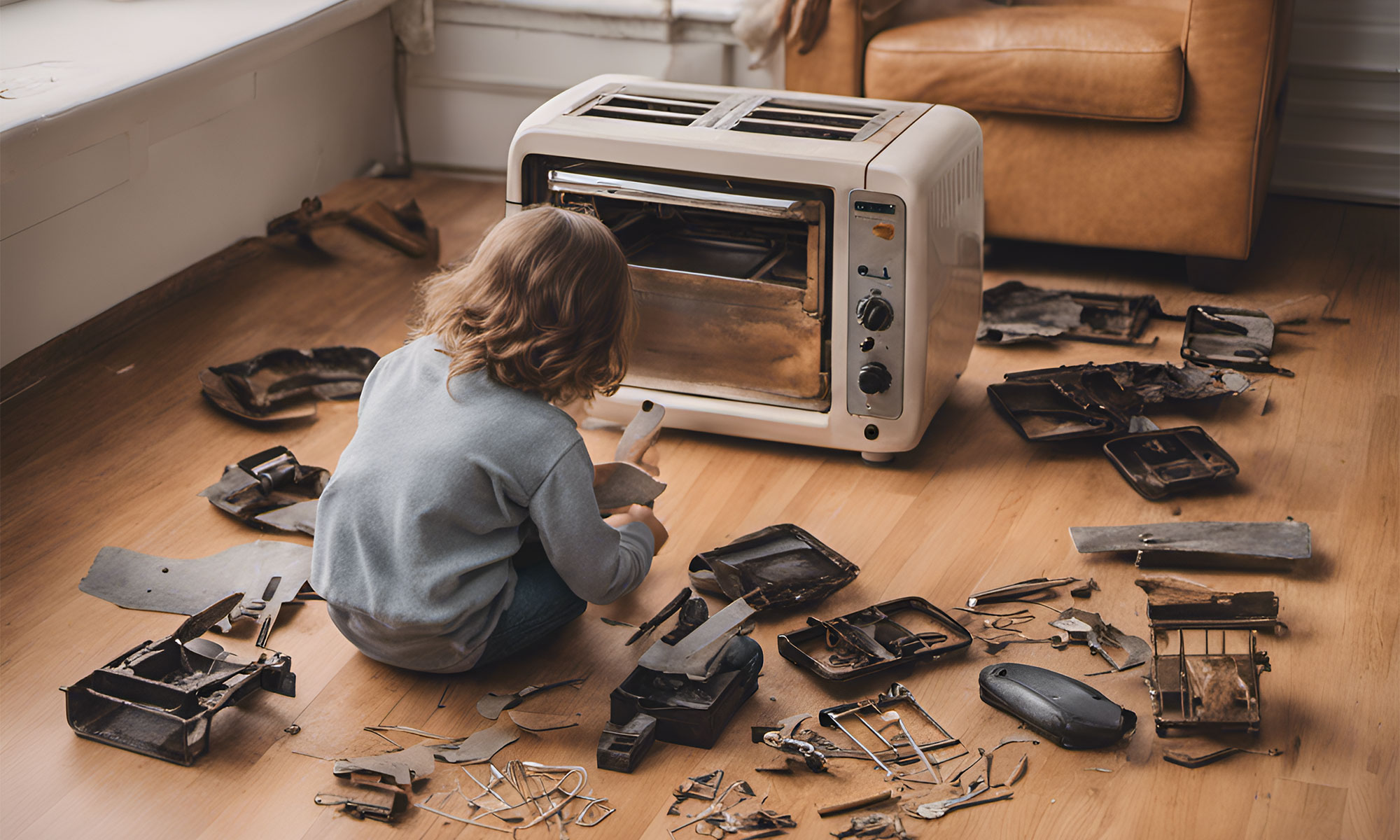
    I love to see how things are made. From the age of two, my mom would save anything that broke so I could take it apart. A tv, a toaster, a remote, anything. She said I would writhe in happiness taking it apart, like the first time I tried chocolate ice cream. Once I had finished disassembly, I would get sad it was over, then frustrated and embarrassed that I couldn’t put it back together.

    After a while, my problem solver part would step in and make something new from all the pieces, like an invisibility gun – which inevitably didn’t work either.

    While spiritual diving recently with one of my guides, I asked that young, happy, writhing part if it needed anything from me now. He just wanted me to watch him take things apart. Then, I showed him some of the pieces of complex fine jewelry and farm machines that I’ve made since. We both writhed together, the current me who loves to show off, and the younger me in awe.

    I learned in that journey that the sadness, frustration, and embarrassment I experienced were not the same part of me that enjoyed taking the object apart. Nor was the problem solver. Learning this gives me permission to fully appreciate the joy on it’s own, without the guilt or the pride.

    It also reminds me that I’m made of lots of little parts like those objects and I can put them back together in any order I like.

  • About me

    About me

    Uncertified Thoughts are lessons I’ve learned interwoven with my experiences. Each concept I learn unlocks another door. With each door, I understand the world a bit more. The greatest power is in the cumulation of lots of small doors that connect in different ways to exponentially unlock new doors.

  • Celebrate mistakes. Make Walterations.

    Celebrate mistakes. Make Walterations.

    I lived in a townhouse style dorm my sophomore year of undergrad at Tufts. The yellowing plastic domed cover over the ceiling light made the room too dark, so I took it off. I would probably need to replace it after the school year, so I used the same two screws and screwed it into the wall, sideways, by the light switch. It became a catch all for my keys and wallet. Later that day, my housemate, Kevin walked in and said “you should look at majoring in Ergonomics.” That one sentence led me to learn a framework for understanding every failure as an opportunity for creating a better design.

    Ergonomics at Tufts is taught half in the psychology department, so that you understand the user, their motivations, expectations, and assumptions. The other half in mechanical engineering, so that you can design and fabricate a solution. The principal of ergonomics is to change the machine to meet the user. To me, that means a design is wrong if the user makes a mistake.

    Therefore, I never blame the user. Take something like a common car accident. Fast forward in your mind 50 years. There are no car accidents because networked cars now drive in unison. Once cars communicate with each other, being distracted by your phone or falling asleep is encouraged.

    How do I apply this ideal? I look to make everything better. My family calls these ‘Walterations.’

  • Be ready to start again

    Be ready to start again

    After my brain hemorrhage, I was told not to exert myself. Three months later, I was burdened by the worries of those who love me. Everyone was so petrified that I might hurt myself by lifting a grocery bag. So, I picked up, long distance single speed, road biking through the hills of New York and New Jersey and set out to eliminate their concern. If I survived, they wouldn’t worry anymore.

    Riding long distances teaches you many lessons that apply off the bike. Riding gives you stamina to go much further than you think. Pain and time dissolve as you focus on breathing. When riding, I don’t focus on the end, I focus on the next mile. It’s the next mile that will get me to the end.

    And sometimes, it’s lessons at work that I bring back to the bike. When I was designing accessories at David Yurman, I became brutally aware of the emotion when you think you are finished with a design and then learn a small change requires you to start over. A valuable lesson, though painful to learn. I’ve become a voice of caution, I expect that I will start again every time I finish anything. Now, when I get to the top of a hill I am prepared for the next.

  • Shoot past your goal

    Shoot past your goal

    My dad tells a story of when some kids came upon him at the edge of the forest at a campsite. They asked how he kept picking up a ball and hitting the same tree, so far away, every time. He didn’t miss once. Ah, “I haven’t succeeded once, I’m trying to ricochet off that tree and hit the one to the right,” he said.

    I moved to Los Angeles to be a part of the dot com energy in the late 90’s. After five years, I learned many lessons about the power of software and how a lot of what you sold was made up. There was no precedent in those days, so you just came up with something. I grew tired of the lack of substance, and searched for something new. I found a night school class in metalsmithing at a Los Angeles high school. Brad was a talented teacher as were all my classmates. You could visit any desk and learn something from someone.

    I knew right away that I wanted to make it into a profession. But, I wasn’t interested in going to jewelry school and working my way up. Fabricating jewelry, I quickly realized that my design ideas were far beyond my technical ability. Leaning in on my software days, I figured there had to be some way for me to make my designs on a computer. It was 2001, and the early days of 3d printing jewelry. There was one school in Connecticut. I was on a plane that week and came home with enough knowledge to teach myself Rhino, the 3D design software.

    Some of the elders in my metalsmithing class talked about the JCK jewelry show in Vegas as the show where the real jewelry was shown, but students were not allowed in. They had a strict vetting policy to make sure you worked in the industry in order to get a badge. I really wanted to go.

    I found out there was a design competition sponsored by the International Titanium Council, the winner was awarded at the show! All I had to do was win.

    I read the directions carefully. The piece did not have to be made, a rendering was ok. Judging was in five categories. My mission was straight forward, make something with a perfect score in each category. I could design something in CAD and make a realistic rendering. I designed a ring that showcased the benefits of titanium, drew on the leading edge of jewelry design, and pushed the boundaries of physics. I sent in a glossy photograph glued to thick cardboard. People thought it was a real photo.

    I got the call five weeks before the show. I wasn’t allowed to talk to the press, but they were booking a flight, a hotel, and had a badge for me to get in the show! Check.

    So, I pushed my goal further down the line. I had five weeks to prepare. I set out to get my dream job designing for David Yurman, in New York.

    I didn’t have any designs to show, my first and only ‘real jewelry’ design to date was the titanium ring. Everything else were crude handmade crafts that I made in night school. From my experience in software, I knew that I needed a PR Kit, a portfolio, the works. With five weeks, I had to focus on design. I leaned on dear friends who stepped in to do the rest. Jessica set out to write the press kit, James came in to take head shots, Eric, a stylist, bought me a wardrobe. Cat, worked at an advertising agency and made my renderings into a spiral bound padded portfolio. I created my first three collections.

    Five weeks later, I was ready. I learned from the Titanium Council that the VP of Design at Yurman, was a past judge. This was my in! About eight months later, I moved to New York as David Yurman’s first CAD Designer.